"When Did You Start Dancing?"
A look at the best time to start Irish dancing if you want to be a World Champion
MINDSET & MENTAL TRAININGFEIS PREPARATION
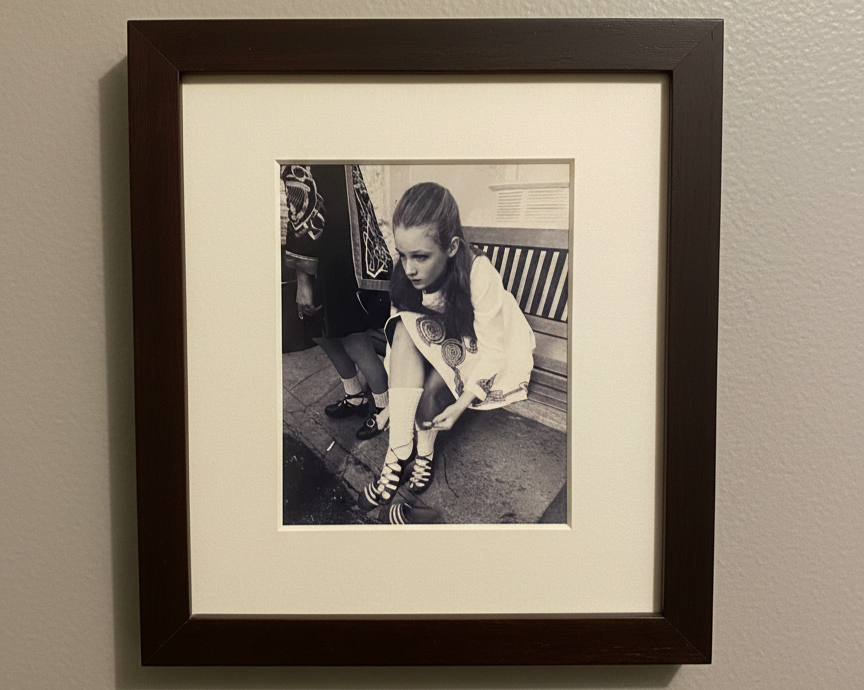
I started Irish dancing when I was ten. I was in 5th grade and had watched a classmate and her sisters perform for us on St. Patrick’s Day. I knew instantly I wanted to do it. I only danced for a couple of months before stopping—the specifics of which completely escape me. But after a summer holiday in Ireland, I returned home as a twelve-year-old and signed up again. I remember feeling like the “old” kid in the class, as the other dancers were at least four years younger than I was.
I desperately wanted to compete in championships and dance with girls my own age. I wanted to be a World Champion. I knew I had catching up to do, so I was thankful that I came from a very active family (a little genetic boost) and had been in ballet and other dance forms since I was two. I made it to open championships in a matter of months and placed 8th at my first Oireachtas—a feat I credit to my TC and dancing school as much as to my own dedication and talent.
But it isn’t always that easy.
The Big Question
In gymnastics, dance, figure skating, high diving, and similar skill-based sports, the clock starts ticking early. These sports are built not just on strength or endurance, but on technical precision, rhythm, body awareness, flexibility, and years of progressive skill layering.
This brings up one of the most common questions parents and new dancers ask:
What’s the best age to begin if the goal is professional-level mastery?
The answer comes from child development research, elite athlete pathways, and decades of observation across skill-dominant sports.
Ages 5–8: The Golden Window
Most elite athletes in technique-heavy sports begin in the early elementary school years not because of pressure or specialization, but because their brains and bodies are primed for learning complex movement.
During early childhood, motor pathways form more easily and fine movements are learned faster. Mobility is naturally higher in kids; it is far harder to reach elite-level flexibility if beginning after puberty. A young brain adapts to balance, rhythm, and spatial awareness with less cognitive effort, so movement feels intuitive rather than calculated.
Children also have a naturally favorable power-to-weight ratio, making it easier to execute movements requiring strength, speed, and agility. Fear thresholds are lower, which helps with skills that involve a degree of risk.
Ages 5-8 are years when cartwheels, turnout, leaps, and spins don’t just strengthen muscles, they shape neural architecture.
A child who moves well early in life develops a motor vocabulary that becomes the foundation for future skill acquisition. This is why most Olympic gymnasts begin around ages 4–6, and many professional dancers begin between 5–8. Even those who don’t specialize yet benefit from general movement experiences in this window.
Ages 10–13: Strong for Development and Specialization
Not everyone needs to start extremely young. Pre-teens—and even some adolescents and adults—can still reach high levels, especially if they were active as kids, trained across multiple movement-rich activities, and enter a supportive, well-coached environment.
This age range is actually ideal for refining technique, building strength and power, and developing performance expression. Kids at this age have greater internal motivation and training capacity. They can handle more structured practice, understand corrections better, and commit to purposeful repetition. They are also exposed to more competitive environments and talent pools.
In many sports, progression accelerates dramatically between ages 10–13.
Irish dancing is best approached as a mid-specialization sport, which means that children benefit from a broad base of movement, rhythm, and athletic exposure in their early years, and then transition into more focused training somewhere between ages 10 and 13. This timing aligns perfectly with a stage of development when motor skills are still highly adaptable but children are also ready for more structured practice. During these years, dancers can rapidly refine footwork, timing, and coordination, while also beginning to handle the strength, plyometric, and stamina demands of harder classes. They are mature enough to focus on technique but young enough that new movement patterns still “stick” easily.
Why Teens and Adults Face a Steeper Climb
Late starters can reach high levels—there are exceptional examples—but their path is undeniably different.
Neuromuscular plasticity declines with age. Motor learning is possible at any stage of life, but it’s not equally efficient. Movements that become instinctive in a seven-year-old remain cognitively taxing for a seventeen-year-old. Children automate; adults analyze. That means children have more mental bandwidth for expression, endurance, and effort, whereas older learners split attention between thinking and doing.
Flexibility is also significantly harder to develop later. The extreme mobility required for high-level dance is far easier to build in childhood. Teens and adults carry years of ingrained movement habits and muscular tightness. They can improve—often dramatically—but gains require more time and patience.
Elite technique is not a collection of isolated tricks; it’s a layered progression. Balance precedes controlled turns, which precede pirouettes, which precede combinations, turns under fatigue, and turns under performance stress. Late starters must compress these layers into fewer years while also unlearning compensations.
In Irish dancing, young dancers grow into their jumping mechanics and strength demands as their bodies mature. Teenagers and adults without prior athletic exposure often need significantly more time to adapt to the impact loads and aerobic demands. Their bodies are heavier, less flexible, and less elastic, which can feel frustrating when standing beside naturally springy younger dancers. Adults, in particular, are more likely to face strains from attempting to elongate muscles too aggressively.
Start Early, But Don’t Specialize Early
Children should be introduced to skill-based sports in early childhood, but they should not fully commit to one discipline at that age. Early exposure is beneficial; early specialization can be harmful.
Specializing before age nine tends to create more problems than benefits. Younger dancers often lack the joint stability, strength, and movement foundation to tolerate the repetitive drilling required in Irish dance. This increases the risk of overuse injuries, burnout, and stagnation.
They also miss out on the broad movement vocabulary built through playing multiple sports, taking different dance styles, or simply exploring varied activities. This variability is deeply protective—it develops resilient, adaptable athletes with richer coordination.
Puberty adds another layer. Girls who excel as children often face sudden slowdowns when their bodies change. Differences in strength, balance, proportions, and energy availability become more pronounced in the teen years. Starting specialization too early can magnify those challenges.
Build the broadest base possible in childhood—then specialize with purpose.
Kids should run, jump, climb, swim, tumble, and try multiple sports. These experiences support elite performance later, even if they eventually choose Irish dancing exclusively.
But waiting until after thirteen to specialize can make the technical climb steeper. By then, movement patterns are more rigid, flexibility declines, and the cognitive load of learning complex footwork is heavier. Dancers who specialize later often feel like I did, as though they’re “catching up,” simply because the technical consistency demanded in Irish dancing is harder to acquire once the body has matured.
The 10–13 window remains the strongest runway for long-term success.
A Note on Puberty
Puberty can disrupt rather than refine skill. Early starters enter puberty with technique already wired; late starters enter puberty still learning basics—with a body that is suddenly longer, heavier, less flexible, and differently proportioned.
The older athlete isn’t just learning a skill, they’re learning it (or relearning it) in a body they are still getting used to.
Teens must relearn familiar movements in an unfamiliar body. It’s discouraging, especially for dancers who feel like they’re “behind.” Parents can help by normalizing the awkwardness and pointing out incremental improvements—no matter how small.
What It’s Like for Adults Who Are New to Irish Dance
Adults who take up Irish dance experience the learning process very differently from children, but not in a way that should discourage them. Adults tend to learn the steps more cognitively: they think about patterns, break down the timing, and rely on deliberate repetition to make movements feel natural. This can sometimes feel slower compared to children, who absorb patterns more intuitively, but adults actually progress steadily because they are focused, motivated learners who value precision.
One of the biggest early hurdles for adult beginners is impact tolerance. Irish dance looks light and effortless, but it places significant demands on the feet, calves, quads, and hips. Adults often need more time to build the strength required for jumps and for the repetitive striking of hard shoe. They also tend to have stiffer ankles, tighter hamstrings, and less natural mobility in the hips than children, simply because adult bodies have settled into long-term movement habits. As mentioned above, these limitations are not fixed. Adults just need a bit more intentional stretching, strength training, and gradual progression to stay healthy.
Rhythm and percussive coordination can also challenge adult dancers, especially those who have never done a musical or rhythmic sport before. Producing clean sounds in hard shoe while staying in time with the music takes practice, and many adults feel awkward at first. But rhythm is tremendously trainable (see here), and adults often develop timing more quickly than they expect once they understand how the patterns fit together.
Confidence is often the biggest unseen obstacle for adults. They frequently worry that they are too old, too inexperienced, or too far behind dancers who started as children. But adult dancers bring advantages kids don’t: they are disciplined, they seek feedback, they practice consistently, and they care deeply about improving. With smart coaching and patient skill development, adults regularly reach high levels in both soft and hard shoe, perform in shows, or compete successfully. They simply travel a different path—one that relies more on structured practice, targeted strength work, and an understanding of how to train an adult body safely.
The truth is that adult beginners often stay in Irish dance longer than many childhood starters because they choose the sport for joy, challenge, and community. Their progress may look different, but their potential is very real.
Developing the Human First
Healthy motivation, autonomy, curiosity, resilience, and joy in movement matter more than early talent. The psychological environment drives long-term success.
Children who are free to explore, to build confidence, to play, and to grow emotionally become far more resilient dancers once specialization begins. When we focus on the whole person—their autonomy, self-discovery, physical development, and well-being—we create dancers who thrive.
For adults, this theme matters just as much. They arrive with full lives, responsibilities, and histories—and honoring that humanity makes the learning process sustainable. When we prioritize the person before the performance, dancers of every age form a deeper, more enduring connection to the art.
So—When?
If the goal is to become a World Champion, exposure at ages 5–8 provides the strongest developmental head start, while specialization between ages 10–13 offers the best runway for elite performance.
Starting in adolescence or adulthood is harder—but absolutely possible and definitely worth encouraging. Greatness isn’t defined by age. It’s defined by process, consistency, identity, support, resilience, and purpose.
Social
Phone
info@jigstrongcoaching.com
+1 415 301 0043
© JigStrong Coahing 2025. All rights reserved.