
Do Champions Succeed Because of Talent or Because of Their Teacher?
Why Your Dance School Might Not Matter
TECHNIQUE & FORMFEIS PREPARATIONSTRENGTH & CONDITIONINGMINDSET & MENTAL TRAINING
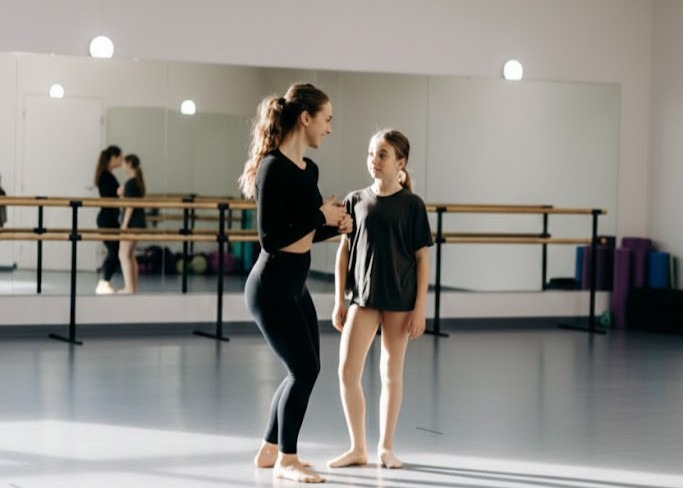
The Irish dancing world is filled with breathtaking athleticism and artistry. Since Riverdance and subsequent shows delivered Irish dancing to a global audience, there has been a sharp rise in participation, with social media offering another bump in more recent years. The broader pool of dancers has both increased the number of available events and enhanced the quality of competition at every level.
While many Irish dancers take classes as a hobby or to learn a new skill, most dancers choose—or are pressured—to compete. Nearly every dancer has a moment in their career where they dream of being on top of a podium. But behind every top dancer and every glittering podium photo sits a debate that’s been alive for decades:
Are champions born from their own talent and individual work ethic, or are they molded by great instruction?
This isn’t just a philosophical question. It affects how families choose schools, how teachers structure their programs, and how young dancers view their own progress.
“Nature loads the gun. Environment pulls the trigger.”
As performance—from elite sprinting to endurance cycling to Irish dancing!—pushes human limits, we ask: What really separates the best from the rest? Today, mounting evidence suggests the truth is not “either/or.” Genetics, quality practice, coaching, psychology, and opportunity all influence the trajectory of a dancer, however, biology (nature) is really the driving force.
Genetics plays a substantial but not fully deterministic role in individual athletic talent and success. Estimates from twin studies, family studies, and genomic research typically attribute 40–70% of the variance in elite athletic performance or related traits to genetic factors, with the remainder coming from training, environment, nutrition, coaching, psychology, and luck.
Classic physiological traits—body composition, muscle-fiber distribution, aerobic capacity, and even “trainability” or how well someone responds to training—have all been shown to have substantial genetic components.
Twin studies and DNA research show muscle fiber type, VO₂max (the maximum amount of oxygen your body can use during intense exercise), and speed are 50–80% heritable. Certain genes (e.g., ACTN3 “sprint gene”) are almost required for world-class performance in power events. Trainability is around 50% heritable.
The science demonstrates that genetics sets the ceiling and strongly influences the slope of improvement; some people will never become world-class no matter how hard they train, while others have a massive head start.
However, the remaining 30–60% of athletic success comes from training, coaching, nutrition, psychology, opportunity, and luck! Within the top 1% of genetic talent, training and environment decide who actually reaches the podium or professional leagues.
Teaching Is the Difference Between Potential and Reality
Because Irish dancing is a smaller community than other sports, and instruction is based more on technique that has been handed down from prior generations rather than through exercise physiology and other sports science education, I was curious about how important a dancer’s school is to their success.
What the Data Can Tell Us
I am not a statistician, so I sought out AI (Gemini, Grok, and ChatGPT) to help compile and analyze the data. I wanted to determine how selection bias and dancer acquisition might influence the results, so I narrowed the analysis to longitudinal data (tracking the same dancer over time) and dancers who switched schools.
I also controlled for school size, noting that larger schools are more likely to have more talented dancers, and that large schools also tend to be located in areas where families have higher incomes and can spend more on private lessons, studio rentals, and gym memberships.
After reviewing public competition data online, one conclusion seems clear:
Both talent and instruction (teacher/school) matter.
Just as is found in studies on athletic success, the dancer’s unique profile usually drives the majority of long-term success, but it is the coaching that amplifies it.
Major competitions like Worlds, North American Irish Dance Championships, and regional Oireachtas publish results that include the dancer, placement, and the dancer’s school. This gives us one essential insight:
Top placements tend to cluster around certain teachers and schools. This strongly suggests instruction plays a real role.
However, here is the complication:
Talented dancers often move into popular schools, especially once they’re already winning or identified as talented. That means you can’t simply compare School A to School B and call it causal.
What looks like a strong teacher effect could actually just be high-performing dancers concentrating in the same studios.
To separate talent from teaching, you’d need to track dancers over time, especially those who switch schools. That’s the only way to see whether instruction is boosting performance, or whether the dancer would have succeeded anywhere.
The data to do that exists—scattered across online results pages—but it isn’t yet compiled into one usable longitudinal dataset. With scraping and matching, a rigorous causal estimate could be produced, but it would require building that dataset first—anyone want to give that a go?
My AI-assisted observation suggests dancers may place higher after changing schools, implying that instruction could meaningfully influence improvement. We can then reasonably assume this means some schools and teachers really are better than others and have a significant impact on their dancers.
A Good Teacher
I have heard dancers complain that a former school was not competitive, which usually translates to a lack of drills, technique development, or motivation to keep up to date with latest trends in dancing style. The school matters. Some schools just aren’t in the business of competing—and that’s ok!
If genetics sets the potential, deliberate practice provides the vehicle. Then, coaches, teaching, and environment often determine whether that vehicle actually reaches the destination or stalls early.
Recent studies show that the quality of the coach–athlete relationship matters. A 2025 meta-analysis of youth sports found a stable, positive effect size linking strong relationships with better performance outcomes.
Sometimes it isn’t necessarily the steps or drills given by a teacher, but in the support and relationship they offer.
Good coach-athlete relationships satisfy athletes’ psychological needs (autonomy, competence, friendship), which in turn boosts motivation, consistency, and well-being, all of which support long-term development.
A good teacher influences:
What and how you practice (quality, specificity, progressions).
Whether you stay engaged or burn out.
How you respond to failure, setbacks, and plateauing.
Injury prevention, recovery, and long-term sustainability.
Builds belief, resilience, and confidence.
In other words: a great teacher can unlock latent potential. A poor or indifferent one, or one focused only on volume or competition results, can suppress or waste that potential.
A good teacher and school builds a dancer’s capacity.
Studies in sport psychology consistently find that relationship quality between teacher/coach and athlete has measurable effects on motivation, persistence, stress response, and performance.
Athletes perform better when they feel supported, challenged, and valued by their coach. Hearing encouraging words from a teacher just prior to going on stage directly affects stage presence and confidence in the performance.
Clear communication and investment in a dancer improves skill acquisition and retention. The feedback a dancer receives on timing, turnout, rhythm, and precision lands better when they understand what’s being asked of them and when they trust and respect the teacher.
Trust reduces anxiety and increases intrinsic motivation. Dancers are more likely to push through plateaus instead of burning out or internalizing perceived failures.
Guidance and the push for autonomy beats authoritarian control. Teachers who forget the joy and artistry in Irish dancing will foster fragility in their dancers, making them less likely to remain at their school or in the sport. Teachers who take competition seriously, but the dancers more seriously, retain them longer and produce better dancers.
Narcissism and Cheating
“Toxicity” is a word that gets thrown around a lot when describing certain dance school environments. It is related to the cutthroat tactics teachers will use to secure top spots for their dancers. The welfare of a dancer (youth or adult) disregarded or comes second to results.
Just as in any competition arena, there truly are some narcissists and cheaters. Dancers will often stay with a school to avoid repercussions or because there aren’t many options available to them. This complicates the normal “marketplace regulation” that would usually take place; people leave or don’t buy from places that have poor products or service.
While this is an issue, I will say that schools rarely operate with just one teacher. There are often many other TCs or helpers who care deeply about the integrity of the sport and the dancers they teach.
Dancers and their families, particularly those new to the Irish dancing world, are unfamiliar with dance school reputation. They may be confronted with a bad teacher after having been in a school for months or years, therefore having built relationships with other dancers and teachers and feeling part of a team. They might not want to leave.
Teachers are also human. They connect more with some dancers than other dancers. They make mistakes, such as letting a bad day bleed into their tone and volume when issuing corrections during class. When they have big teams, they are stretched thin. They care about how their school ranks.
In a competitive sport, coaches naturally spend more time with those who have more potential. It does not mean they ignore their other athletes, but it is expected that they put more energy into the athlete who will have more success. Dance teachers are the same.
A good teacher still recognizes all of their dancers and celebrates their achievements, whether it’s in grades or on the world stage. They see their dancers as people.
Poor coaching environments highlight the impact instruction can have—not just on results, but on longevity, confidence, and mental health.
What This Means—Does Dance School Matter?
If a dancer is exceptionally gifted and relentlessly disciplined, they will rise almost anywhere. This should be reassuring to anyone at a smaller school. Small schools have the advantage of smaller class sizes, meaning more individual attention can be given to a dancer.
If a dancer is moderately skilled but has a great teacher, they will rise higher than their baseline. This is good news for any dancer who hasn’t yet seen a breakthrough in their career. Maybe changing schools is something to consider, or maybe it’s time to hire an outside coach to introduce another layer of support.
Overall, the highest levels of Irish dance happen where both talent and instruction meet. A champion is sculpted by their innate ability, polished by instruction, and sustained by belief.
A dancer does not need to find the most popular dance school to do well! But they do need a teacher who is invested and understands the elements of training and how to build a champion. They need an environment that supports them even when they are not winning, and people who can challenge them without instilling doubt.
Dance schools vary in their programs, so always ask around and do some online digging to find out how much stamina, drilling, and strength work is done. How many dancers compete year after year? How many do you see hug their teachers?
If you or your dancer leave class more hopeful than disheartened, more confident than discouraged, you’re likely in the right place.
Social
Phone
info@jigstrongcoaching.com
+1 415 301 0043
© JigStrong Coahing 2025. All rights reserved.